
Car Privacy: Will Automakers Follow Apple’s Playbook?
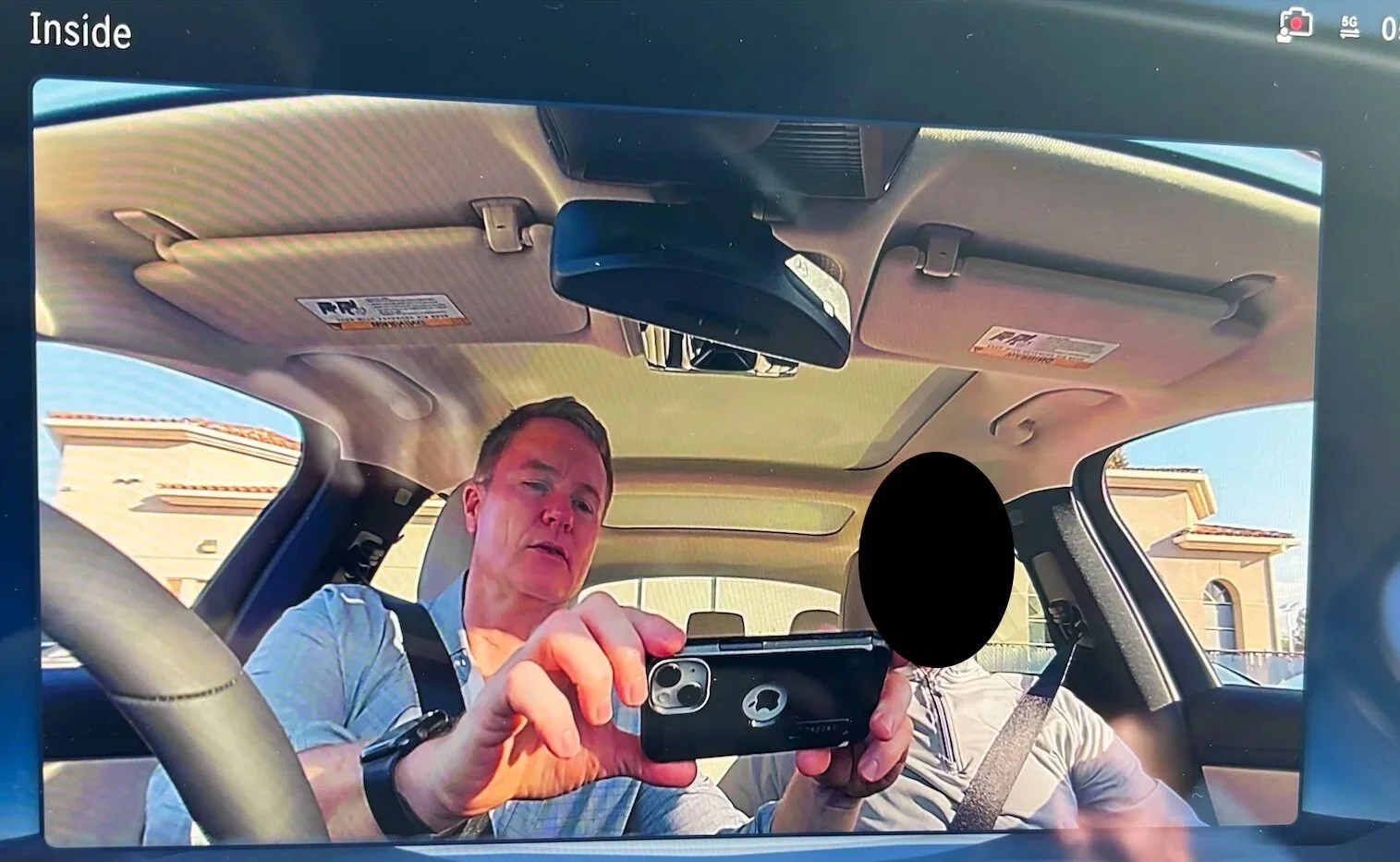
Photo of MBUX display in 2026 Mercedes-Benz E-Class sedan equipped with Superscreen.
They should.
We're about to hit a tipping point as two emerging trends converge:
1️⃣ The democratization of in-cabin sensing and Driver Monitoring Systems (DMS).
Most of us have no idea how powerful —and invasive- these technologies are becoming.
Last week I visited Los Angeles dealerships to see what's already available. I test drove vehicles with interior cameras capable of taking HD video of the cabin. These systems are now in all Tesla models, several Mercedes-Benz and BMW lines, and select models from MINI, Land Rover, and Nissan/Infiniti.
Here's what's coming to US cars very soon:
Whole-cabin biometric sensing: Not just the driver. These systems monitor all occupants—body temperature by zone, heart rate, breathing patterns, pupil dilation, blink rate, drowsiness. Some detect children left in hot cars. Others claim to sense cognitive impairment.
Eye-tracking: The system senses whether you're watching road hazards—and warns you if you're not. Chinese brands like XPeng go further: their "look-to-select" system tracks exactly what you're looking at on the infotainment screen. Press a steering wheel button to confirm. No reaching, no voice commands.
Gesture recognition: Hand signals control cabin functions. Circle your finger to adjust volume or temperature. Wave to dismiss a notification.
2️⃣ Growing regulatory pressure around impairment detection and vehicle safety.
The 2021 Infrastructure Act (Section 24220) requires NHTSA to establish standards for "advanced impaired driving prevention technology" in all new vehicles. The stated goal: reduce drunk driving.
The potential application: cameras that decide whether you're fit to drive—and disable the vehicle if they determine you're not.
NHTSA has acknowledged the technology isn't ready. Even 99.9% accuracy would mean millions of errors. So the mandate has been delayed.
But Section 24220 remains law.
If you think the consumer revolt over subscription fees for vehicle hardware was intense, wait until cars won't start because drivers are anxious during emergencies.
Even if the law is eventually watered down, consumers will remember which automakers betrayed their trust.
---
Bottom line: These two trends converging will seriously damage consumer trust—unless automakers get ahead of them.
How?
➡️ Steal the Apple playbook of giving consumers transparency and control:
✅ Publish in-cabin data privacy policies in plain language—not buried in terms of service
✅ Give owners control—including the ability to disable monitoring completely when not using ADAS features
✅ Default to local processing only, with explicit opt-in for cloud sharing
✅ Publicly state your position: intervention (disabling) vs. warning-only
✅ Advocate for consumer ownership of vehicle-sensed personal data, and protection against downstream data exploitation
What do you think?
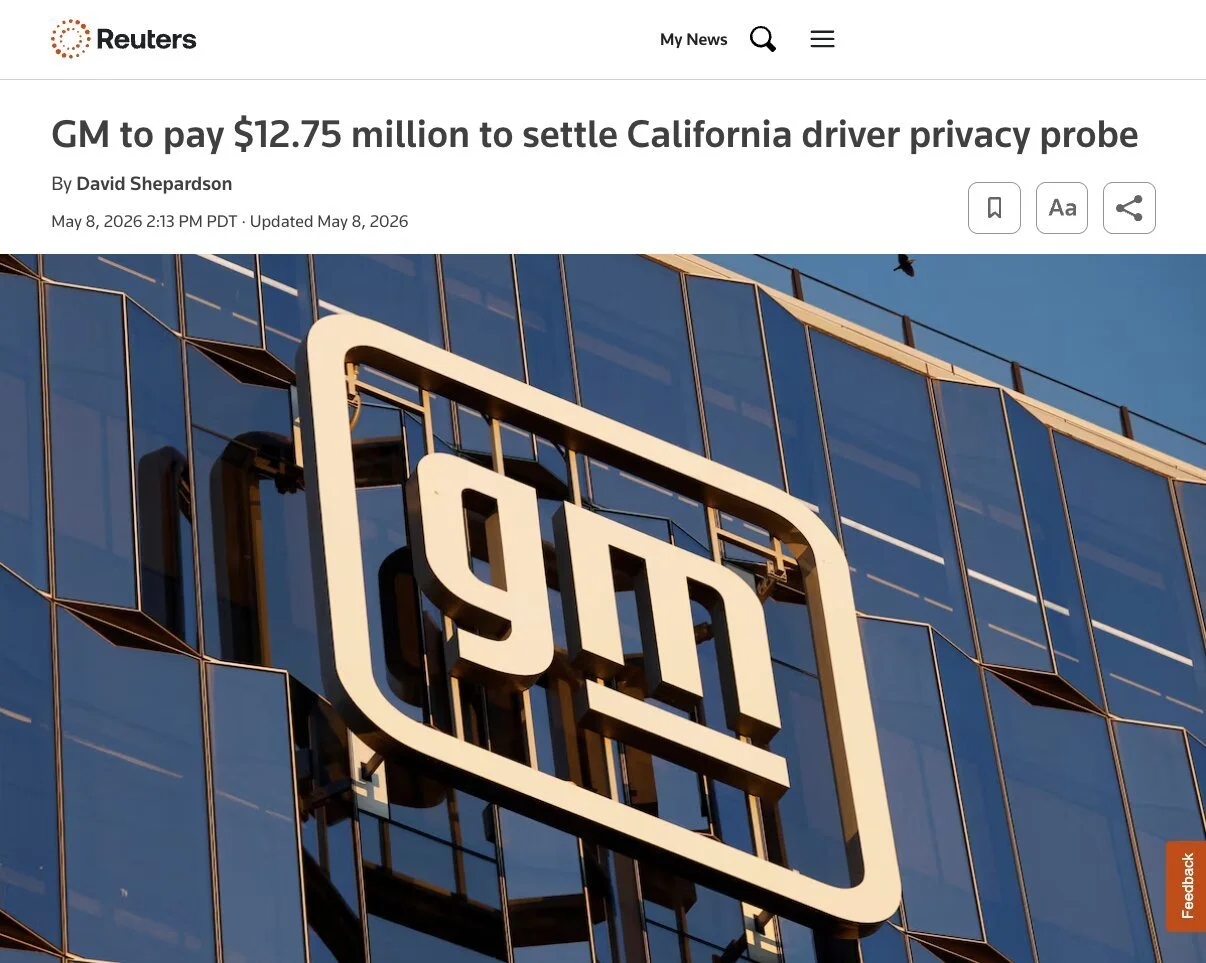
Noteworthy article published just a few days after writing this post:
https://www.reuters.com/sustainability/boards-policy-regulation/gm-pay-1275-million-settle-california-driver-privacy-probe-2026-05-08/
Curious about vehicle luxury features? See our summary of new features that we predict will rapidly grow in popularity, shown at CES 2026.
Or explore more automotive trends in the Blog.
Contact us for custom consumer insights on luxury and electric vehicle shoppers.