
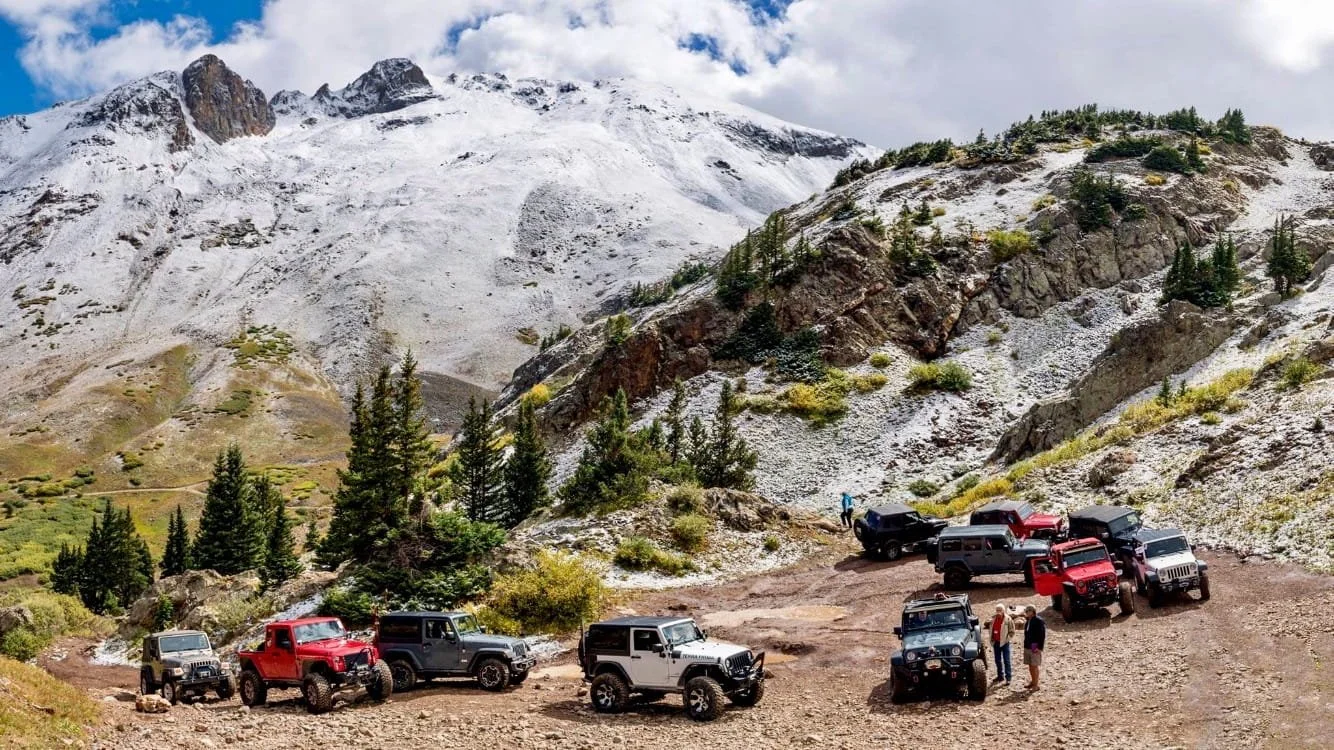
Jeep has backed the Jeep Jamboree off-road trips for enthusiasts since the 1950s. Today, it's more relevant than ever.
Why?
1️⃣ Real trails, real risks.
Each year, about twelve thousand participants show up in their Jeeps and venture out to real, existing trails: Moab slickrock, Badlands, the Rubicon, and dozens more. There are international locations too.
Most locations are remote. For example, the program moves 65,000 lbs of supplies by helicopter each season to build the Rubicon Springs base camp.
The events span every skill level, from first-timers to the Rubicon Expedition, which demands 37-inch tires, front and rear lockers and skid plates.
The program fields around 700 expert trail guides. Even so, it openly warns that your vehicle could be damaged.
This is the antithesis of a manicured demo loop, on a private property, with cute signs telling drivers how steep the grade is.
2️⃣ Empirical evidence that the product can handle it.
Given the risks, owners are routinely shocked at their vehicle’s capabilities. Then they drive home at highway speed, and nothing's wrong. No leak, no warning lights.
The durability of their Jeep is no longer a claim. It's something they saw with their own eyes. And now they know it.
Brands can't advertise that experience.
3️⃣ Two-way dialogue with the brand’s biggest fans.
Most brands make substantial investments to learn what consumers think, and often struggle to find the right testing environments.
At Jeep Jamborees, brand enthusiasts provide unvarnished feedback in genuine scenarios, while paying for the experience.
I spoke with Jeep Jamboree USA's CEO, Pearse Umlauf, to understand how the Jeep Jamboree holds up after 70 years. The answer: it was never a gimmick. It's the real thing.
###
Curious about EV 4×4s? Read why Rivian should follow rather than pioneer autonomous driving technology.
Or explore more automotive trends in the Blog.
Contact us for custom consumer insights on luxury, sports car and EV shoppers.